Dolan Made Security Personal
The real signal is not facial recognition. It is what happens when a principal turns his adversary map into security doctrine.
Avihu Marom · · 6 MIN READ
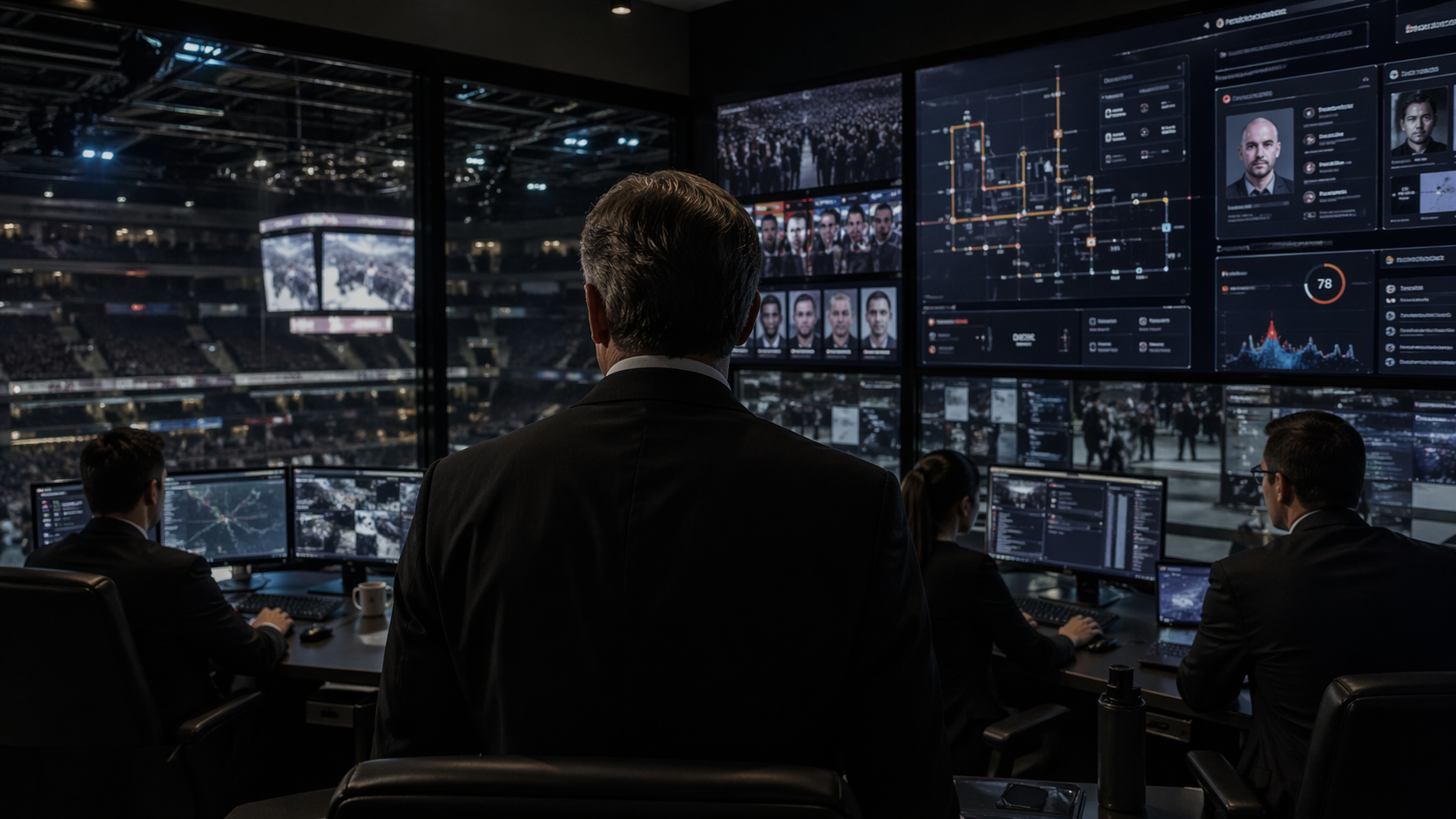
Dolan Made Security Personal
The Break
Most people will read the James Dolan surveillance story as a facial recognition scandal.
That is too small.
The original Wired article is really about something more important: a principal who built a coherent security and intelligence model around his own adversary map.
Not just cameras. Not just venue safety. A full operating logic for identifying, classifying, tracking, and excluding people who create friction around him and his institutions.
MSG Entertainment rejects the reporting as false, misleading, and unverified. It also openly says it has used facial recognition since 2018 for safety and to keep adverse attorneys out of its venues.
That is the signal.
Dolan did not treat security as a tool.
He treated it as command architecture.
The Hidden Pattern
The system is interesting because it is coherent.
That does not make it clean. It makes it useful to study.
Most people approach personal security in fragments. A bodyguard here. A legal threat there. Some cameras. A blacklist. A private investigator when things get ugly.
Dolan’s reported model looks different.
It connects identity, movement, open-source collection, venue access, watch lists, scoring, and response into one behavioral system.
Start with identity.
The article reports that MSG security used facial recognition across Dolan properties, with eConnect systems tied to fast-entry screening technology. It says a security group nominated faces for watch lists and assigned scores that shaped the response: observe from a distance, approach directly, or ban outright.
That is not just access control. That is target classification.
Then movement.
The article describes a two-year tracking effort involving a transgender Knicks fan, identified by a pseudonym. An 18-page report reviewed by the reporters logged her actions inside the venue down to timestamps: ticket scan, escalator movement, interactions with staff, drinks, food, and even bathroom use. Former security sources described the scrutiny as excessive, while the lawsuit alleged she posed no threat.
Then collection.
The article says Dolan’s security chief, John Eversole, instructed deputies to compile open-source intelligence work-ups on that same fan, placed her in the face-recognition system, and directed the security apparatus to focus on her.
Then exclusion.
This is where the system becomes visible to the public. The New York attorney general said in 2023 that MSG reportedly used facial recognition to identify and deny entry to lawyers affiliated with firms representing clients in litigation against MSG. The office said the policy was estimated to affect lawyers at more than 90 firms and raised concerns about retaliation and civil rights implications. MSG’s public position was blunt: attorneys suing the company are not welcome while litigation is active.
Then perimeter expansion.
The article says the operation did not stop at the gate. It describes alleged neighborhood patrols, protest monitoring, quasi-police behavior, and external pressure on people who had not necessarily entered a Dolan venue. The article also reports that seven current and former employees were interviewed and that confidential internal reports and Signal chats were reviewed. Inside the security culture, one current security team member said staff referred to Dolan as “Executive One.”
Now look at the architecture.
- Identity tells the system who you are.
- Collection tells the system what you have done.
- Scoring tells the system how to treat you.
- Access control tells the system where to stop you.
- Security response tells the system how to make the decision physical.
That is the structure.
The Uncomfortable Truth
Dolan’s case is not about whether security should be personal. It already is.
Every serious principal has a personal threat model.
The clean version protects against stalkers, violent actors, extortion, kidnapping risk, reputational ambush, insider leakage, and hostile physical proximity.
The messy version expands the definition of adversary.
That is where this case becomes important.
Dolan’s reported model shows what happens when a principal’s personal map of adversaries becomes operational doctrine.
A critic is not just a critic. A lawyer is not just a lawyer. A fan is not just a fan. A protester is not just a protester.
Each can become an object inside the same security workflow: identify, enrich, score, monitor, deter, exclude.
This is why the “facial recognition scandal” frame misses the point.
Facial recognition is only the sensor.
The real system sits above it.
The important layer is not the camera. It is the decision logic that tells the camera who matters.
That is what leaders should study.
Not because Dolan is the model to copy without limits. He is not. The legal, ethical, and governance questions are real. Regulators, courts, journalists, employees, and affected individuals are already contesting those boundaries.
But dismissing the case as paranoia also misses the lesson.
Paranoia is noise.
This is method.
It shows a principal translating his worldview into security behavior, then making the institution execute against that worldview.
That is exactly what many high-profile executives, family offices, founders, and public figures will want in the next decade. Not just protection. Interpretation. Not just guards. Early warning. Not just gates. A living map of adversaries, motives, patterns, and proximity.
The hard question is governance.
- Who defines the adversary?
- Who audits the definition?
- Who challenges the principal when annoyance is being misclassified as threat?
Without that discipline, coherence turns into overreach.
With that discipline, personal security becomes an intelligence function.
The Hard Stop
Security fails when tools do not match behavior.
Dolan’s reported system matters because the tools, people, data, and response logic appear to move in the same direction.
That is rare.
Most security programs are fragmented. This one is not.
The public sees cameras.
The operator sees doctrine:
- Know who might create friction.
- Know when they enter the perimeter.
- Know what they have done before.
- Decide in seconds.
- Act before they act.
That is personal security as an operating system.
The open question is not whether it works.
The open question is who gets to aim it.