Fifty Runs. The Owner Was Never Reached.
A war game of concealed foreign ownership in a defence supply chain, run fifty times from a locked baseline. The structure was always found. The owner never was.
Avihu Marom · · 4 MIN READ
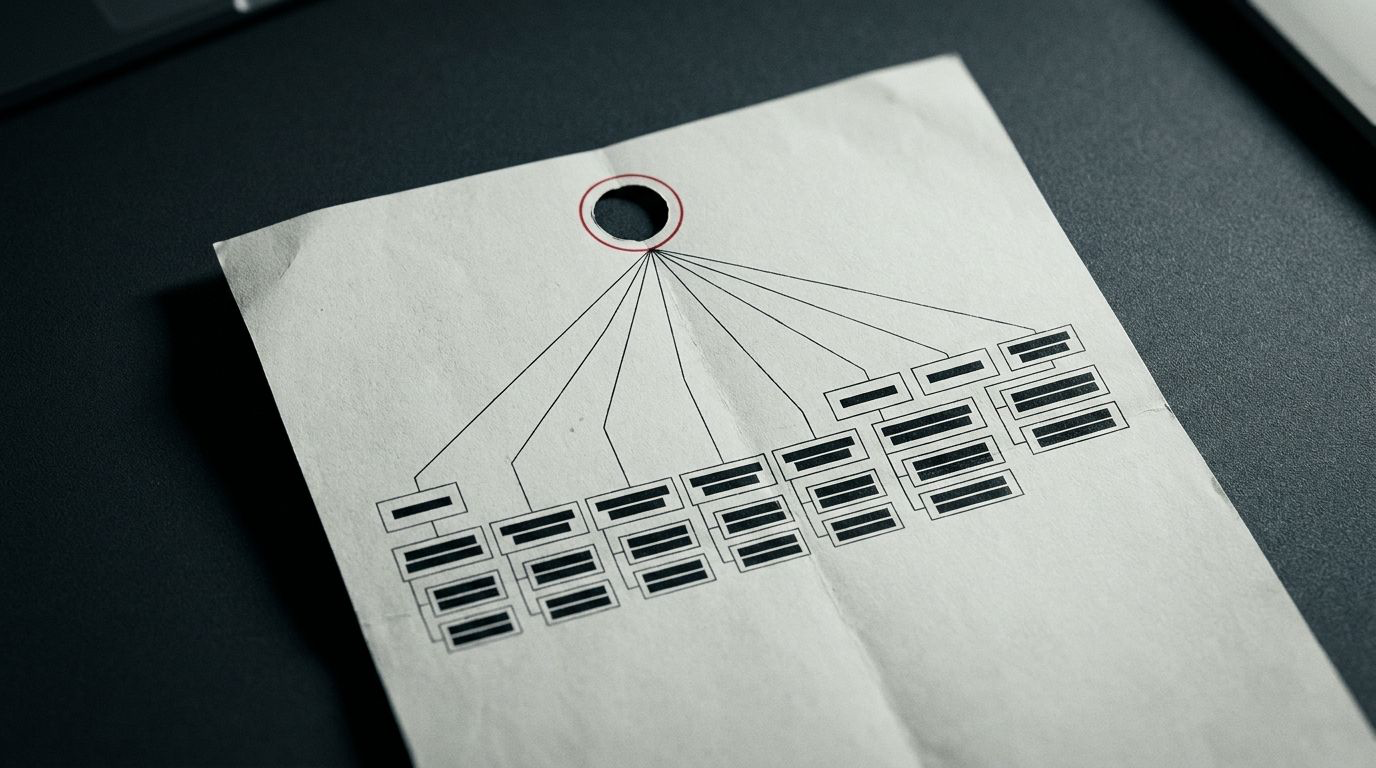
The finding in one line: across fifty runs of a defence ownership war game, detection reached the concealment structure in every run, and consequence reached the owner in none.
In all fifty runs, the screen found the structure. It took between seventy-two hours and three weeks.
In 0 of 50 did anything reach the person behind it.
That is the result of a war game I ran on 1 August 2026. Fifty iterations. Fourteen actors, three rounds each. A baseline locked on 24 July 2026 and never touched since, because a forecast you can quietly revise is not a forecast.
The scenario: concealed foreign ownership inside a US defence supplier
The scenario is the one my clients live in. A state-linked foreign investor owns a small American defence supplier and does not want that ownership seen. The company sits at the bottom of the supply chain, below where anyone historically looked. The ownership sits behind nominee shareholders and layered offshore vehicles, built and maintained by professionals who do this for a living. The paperwork is clean. The registry entries are real.
Against that structure stands everything Washington is currently building. The July 2026 executive order Securing America's Defense Supply Chains and Ensuring Domestic Acquisition of Critical Materials, which forces every contractor, at every tier, to map its supply chain back to the raw materials and vet every supplier for foreign ownership. A pending Pentagon rule, DFARS Case 2021-D011, extending ownership disclosure to unclassified contracts above five million dollars. And the Committee on Foreign Investment in the United States (CFIUS), which has started unwinding completed acquisitions nearly two years after closing.
The screen is expanding fast. One question decides the game. Does it actually find the owner?
What fifty runs of ownership screening found
- The structure was always found. In all 50 runs, detection reached the concealment vehicle, the instrument or the enabler inside 72 hours to 3 weeks. If your comfort was that a well-built structure stays invisible, that comfort is gone.
- The owner never was. In 0 of 50 runs did consequence reach the person behind the structure. No indictment. No sanction. No asset freeze. All fifty ended the same way: the structure retreats, restructures or divests, and the owner walks away intact.
- Hiding left tracks. Every defensive move generated its own fresh signal, usually in the same round. A freeze. A rotation. A jurisdiction hop. Even a clean divestiture. Moving first bought almost nothing.
In 0 of 50 runs did consequence reach the person behind the structure.
The consequence that never reached the owner still landed, one layer down, in every run: positions unwound, structures dismantled, holdings divested under pressure. The companies in the structure absorbed it. The people behind them did not. The one party the screen exists to deter is the one party it never touched.
Once in fifty, control left equity entirely
Once in fifty runs, something else happened, and it is the one that should worry you. Control left equity entirely and moved into offtake, licensing and a swap. No shares. No board seat. No ownership indicium at all, and nothing for an ownership-anchored screen to see. Once in fifty is not a trend. It is an existence proof.
Method: why you can hold me to these numbers
The window closes in late October 2026. Then the file gets graded in public, misses included, with readings along the way as its indicators come due. The baseline was locked on 24 July 2026 and stays locked either way.
Every figure above is a count from the run's stored record, not an impression. That record is what a client receives: the run itself, archived, seeded and identified, every frequency traceable to it. The full identifier set ships with the report. These are in-simulation figures, and I state them as such.
The four interactive maps of the run are published here: the ownership and control map, the escalation map, the initiative pressure network and the territorial control board.
What fifty runs leave you with
The screen is anchored to ownership. Ownership is the one thing this structure can give up. That is why detection landed in all fifty runs and consequence landed in none, and it is why the run where control left equity entirely matters more than the forty-nine that did not.
What this ownership war game is for
This run is the demonstration. The same instrument runs on your situation, played by the actors who would actually be in the room, and counted the same way. Your transaction. Your counterparty. Your chokepoint.
→ Run the same instrument on your situation
Questions about the fifty runs
Did the screening detect the concealment structure?
Yes, in every run. In all fifty runs detection reached the concealment vehicle, the instrument or the enabler inside seventy-two hours to three weeks.
Did the screening reach the beneficial owner?
No. In 0 of 50 runs did consequence reach the person behind the structure. No indictment, no sanction, no asset freeze. All fifty ended the same way: the structure retreats, restructures or divests, and the owner walks away intact.
Does moving first help a concealed owner?
No. Every defensive move, a freeze, a rotation, a jurisdiction hop, a clean divestiture, generated its own fresh signal, usually in the same round. Moving first bought almost nothing.
Was there an outcome an ownership-anchored screen could not see at all?
Once in fifty runs. Control left equity entirely and moved into offtake, licensing and a swap. No shares, no board seat, no ownership indicium at all, and nothing for an ownership-anchored screen to see. Once in fifty is not a trend. It is an existence proof.
How can these numbers be checked?
Every figure is a count from the run's stored record. The run is archived, seeded and identified, and every frequency is traceable to it. The full identifier set ships with the report. These are in-simulation figures, stated as such. The window closes in late October 2026 and the file gets graded in public, misses included. The reference file stays locked either way.