The Real Deepfake Risk Isn’t Deception. It’s Decision Latency.
Why synthetic media is becoming an operational trust problem, not just a misinformation problem.
Avihu Marom · · 5 MIN READ
The Real Deepfake Risk Isn’t Deception. It’s Decision Latency.
Most discussions about deepfakes focus on deception.
That makes sense. Synthetic media is often presented as a problem of authenticity, manipulation, and public confusion. The usual question is whether people will believe false content.
But I think the more important risk sits one layer deeper.
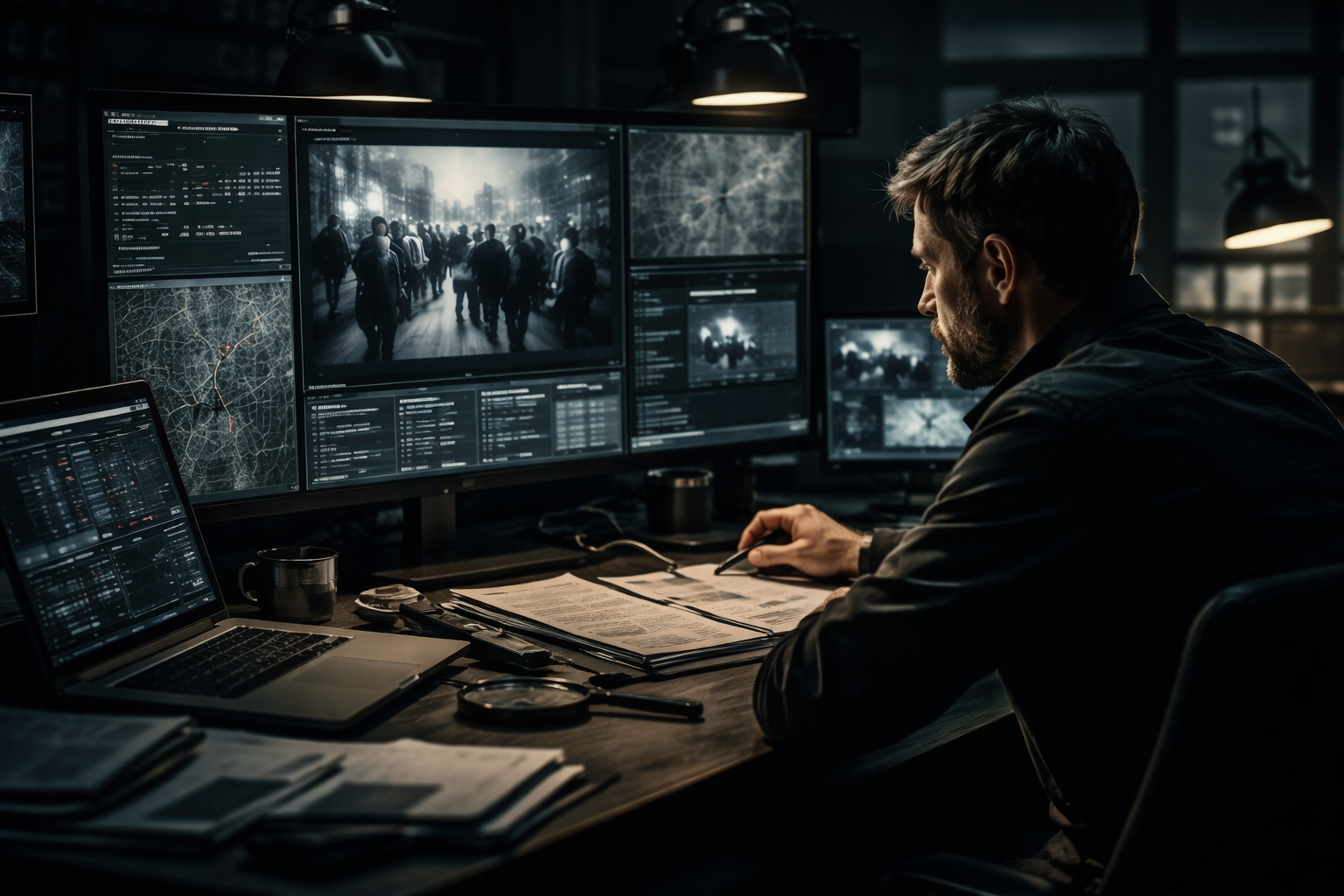
The real problem is not only that fake content can mislead. It is that suspicious content slows judgment. Every questionable video, cloned voice note, recycled image, or miscaptioned clip creates friction inside the decision-making process. Teams pause. Analysts re-check. Communicators hesitate. Leaders lose confidence in what they are seeing. In high-stakes environments, that delay is not a side effect. It becomes part of the damage.
I think of this as decision latency: the time lost when information can no longer be trusted at first contact.
This matters because most organizations do not make decisions in calm conditions. They make them under pressure, with incomplete visibility and with limited time. In that environment, even a small increase in uncertainty can have an outsized effect. The issue is no longer only whether false content exists. It is whether the people responsible for assessing events can still move from signal to decision with enough confidence and speed.
That is why deepfakes should not be treated only as a misinformation issue. They are increasingly an operational trust issue.
The first casualty is tempo
The common framing around synthetic media is still too narrow. It usually assumes a simple binary: either people believe the content or they do not.
In practice, organizations often struggle before that point.
When suspicious content appears, it triggers a sequence. Someone flags it. Someone else tries to verify it. Internal discussions start. People become more cautious about relying on visual or audio evidence. Even authentic material now has to overcome a higher level of skepticism. The result is not just confusion. It is slower judgment.
That slowdown matters more than many people realize.
In many real-world settings, speed is not a luxury. It is part of the decision itself. A delayed assessment can mean a delayed response, a delayed escalation, or a delayed opportunity to contain a problem early. Even when false content is eventually exposed, it may already have succeeded in consuming attention, wasting analytical bandwidth, and disrupting the flow from observation to action.
An attacker does not always need to convince everyone. Sometimes it is enough to create hesitation.
The mistake many organizations still make
Many organizations still approach this as a communications problem.
It is not. Or at least not only that.
It is also a leadership problem, a risk problem, and a workflow problem.
If the plan begins only after a suspicious clip appears, the organization is already operating reactively. It is now working on someone else’s timeline, with someone else’s priorities, inside an information environment shaped by virality, manipulation, and noise.
That is not a strong position.
What matters is not whether one person on the team can occasionally identify a fake. What matters is whether the organization has a repeatable process for reducing uncertainty without freezing altogether.
That requires more than skepticism. It requires structure.
What to do instead
Most organizations still approach this problem backwards. They wait for a clip, post, image, or voice note to surface, and only then ask the question: is this real?
By that point, they are already reacting.
A stronger model is to define your information needs in advance and build a standing collection process around them. That can happen internally, or with trusted external partners, but the principle is the same: do not rely on whatever happens to reach your feed in a moment of crisis. Collect continuously against the questions that actually matter to your organization.
That changes the role of new content. Instead of becoming the starting point for analysis, it becomes something you test against an existing picture.
A practical version of that looks like this:
1. Define what you actually need to know.
Most organizations consume far more information than they truly need. A better approach is to identify a small set of priority questions in advance. What developments would materially affect operations, exposure, partners, reputation, or decision-making? Once those requirements are clear, collection becomes more focused and less vulnerable to distraction.
2. Build a continuous collection process.
If information only reaches you once it becomes visible, viral, or urgent, you are already late. A standing collection process helps you follow relevant signals before they break into the open. That may include open-source monitoring, structured watchlists, sector-specific tracking, or regular intelligence support. The key is consistency. Reliable assessment starts with regular collection, not last-minute scrambling.
3. Maintain your own baseline.
The advantage of continuous collection is not simply that you see more. It is that you build context over time. You know what is normal, what is changing, which actors matter, and which signals deserve attention. That baseline makes it easier to assess new claims because you are no longer judging them from scratch. You are comparing them to a live picture you already maintain.
4. Reduce dependence on viral content.
When organizations depend too heavily on whatever is circulating publicly, they inherit the weaknesses of the public information environment: noise, manipulation, delay, and uncertainty. A stronger internal picture reduces that dependence. Viral content may still be useful, but it no longer drives the process. It becomes one input among others, rather than the trigger for the entire response.
5. Shorten the gap between signal and decision.
This is the real advantage. The goal is not perfect detection, and it is not total certainty. The goal is to reduce the lag between an event taking place and your ability to assess it with confidence. Organizations that collect continuously are better positioned to verify faster, respond earlier, and act with less friction when events move in real time.
This is the difference between reacting to noise and operating from awareness. In an environment shaped by synthetic media, miscaptioned footage, and fast-moving narratives, the strongest position is not to become better at guessing. It is to become less dependent on guesswork in the first place.
What leaders should take from this
The real issue is not whether synthetic content will continue to improve. It will. Be ready.
The real issue is whether the people and institutions that depend on information can preserve trust and tempo as that happens.
The organizations that handle this well will not be the ones claiming they can instantly identify every fake. They will be the ones with disciplined collection habits, clear verification thresholds, and enough internal structure to keep moving while uncertainty is still being reduced.
That is a strategic advantage.
Because in the next phase of information conflict, the winners will not simply be those who can detect deception. They will be those who can continue making sound decisions while everyone else is stuck in verification paralysis.