Three counts, one strait
Three accurate counts of Hormuz traffic point different ways in November 2026. Decide on your own exposure instead, and write down the signal that would change the plan.
Avihu Marom · · 3 MIN READ
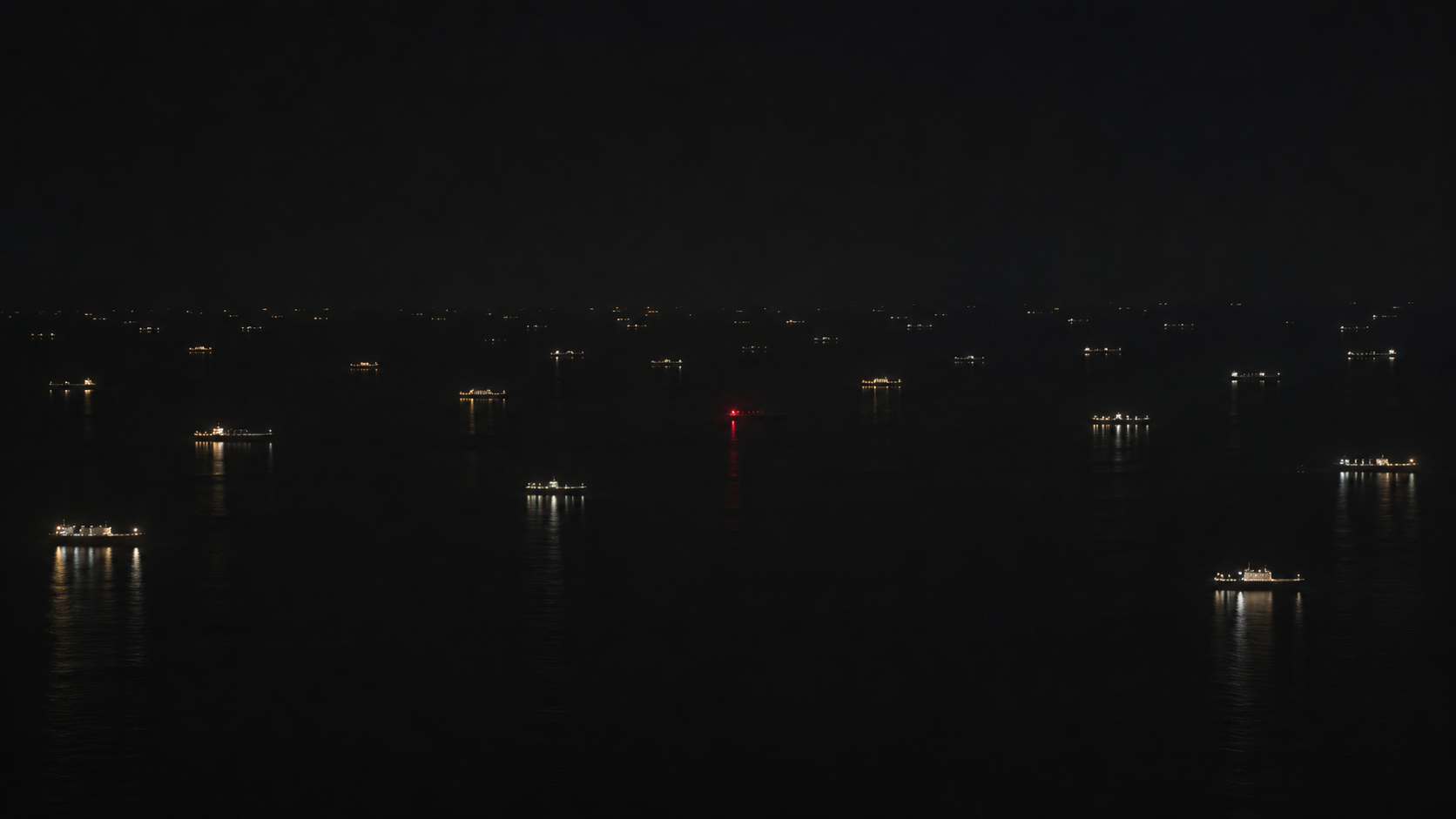
As of 12 November 2026, about 165 ships were riding at anchor near Fujairah and Khor Fakkan, on the Gulf of Oman side of the Strait of Hormuz, by the Joint Maritime Information Center's own count. Many of them are, for somebody, a delivery date.
Ask whether the strait is open and you can get three accurate answers that point different ways. My argument is that a company should not decide on any of them. It should decide on its own exposure, and write down in advance the signal that would change its plan.
What is on paper
JMIC, the Joint Maritime Information Center that advises merchant ships in the region, kept its threat level at severe in its advisory of 8 November and warned that further deliberate attacks were highly likely. It said independent tracking indicated "single to low double digit transits per day".
On the US side, naval coordination reported 91 transits it had facilitated between 5 and 7 November, about 30 a day. In 2025 the strait averaged about 138 vessels a day. gCaptain, reporting the figures on 10 November, pointed out that the US number and JMIC's cannot be compared directly.
On 10 November UKMTO reported a tanker struck by an unidentified projectile about 19 nautical miles north-east of Lima, Oman. The crew were safe. UKMTO did not identify the vessel or establish where the projectile came from.
What is only claimed
On 14 November Iranian state media said mines had struck three tankers, which caught fire while "attempting to slip through a prohibited route". Reuters, which carried the report, could not immediately verify it. No vessel was named.
A claim is not nothing: it is one party's public account of the route. It is not yet a fact about any ship.
Why the numbers will not settle it
Independent tracking measures the traffic an observer can see. The US-facilitated count measures what one programme moved. The 2025 average measures what normal looked like. Each is right about its own question, and none of them is what a board needs to know: when does our consignment arrive, and what do we do if it does not?
Waiting for the counts to agree is waiting for the crisis to end. A decision cannot wait that long.
The bottom line: decide on your exposure, not on the strait
Four things can be settled on paper now. Where each consignment physically is: loaded, afloat, at anchor or not yet shipped. Which legs of its route cross the strait, and which could be moved. Whether the contract says what happens if a leg waits. And which single observable event would make you switch to the fallback, named before it happens.
Why I read it this way
That last step is the oldest discipline in intelligence work. You decide in advance which events would change your assessment, you watch those and not the noise, and you grade every report by where it came from before you let it into the picture.
Confirmed apart from claimed; the trigger written down before the headline. It is how I approach a company's decision, and it is why this piece separates what JMIC and UKMTO recorded from what was only announced.
Signposts for this one
The threat level and the transit wording in JMIC's next advisory. Whether UKMTO confirms or attributes any of the claimed incidents. The size of the anchorage off Fujairah. Watch these rather than the headlines.
A decision briefing sets this out for one decision: what is established and on what source, what is not, and what would change the picture. https://avihumarom.com/advisory
No Theatre takes one real case a week and reads it the way an intelligence and risk advisor would. Subscribe from my profile.